Saint Francis University Students Apply High-Impact Practices in Global Conservation Field Experience in Namibia
Loretto, PA (02/13/2026) — Ten Saint Francis University (SFU) students enrolled in BIOL 322: Field Biology demonstrated the power of experiential and high-impact learning by traveling to Namibia, Africa, for a week-long immersive conservation experience with the internationally recognized Cheetah Conservation Fund (CCF).
From January 4-12, 2026, students and faculty embarked on a rigorous field-based educational experience that bridged classroom theory with real-world scientific research and conservation action. Under the leadership of Dr. Lane Loya and Dr. Justin Merry, participants collaborated with CCF ecologists, conservation specialists, and field researchers on projects that reflect the complex, interdisciplinary nature of wildlife science and ecosystem management.
"This opportunity exemplifies high-impact educational practices," said Dr. Loya. "Our students are not only observing science - they are doing science, contributing to meaningful conservation work that has global relevance."
During their time in Namibia, SFU students engaged in a range of professional methodologies, including:
- Fieldwork with trained detection dogs to locate carnivore scat, followed by DNA extraction and genetic species identification in the laboratory
- Discussion and trials of camera traps and radio telemetry systems that are used in ongoing wildlife monitoring.
- Vegetation surveys and ecological sustainability analyses
- Participation in livestock guarding dog programs that mitigate human-wildlife conflict
Students also took part in nocturnal game drives, bird surveys, and behavioral ecology research projects, gaining firsthand experience in field data collection, ecological assessment, and applied conservation strategies.
The Namibia experience underscores SFU's commitment to high-impact practices - including study abroad, faculty-mentored research, and immersive fieldwork - that significantly enhance student learning outcomes and professional readiness. Through this experience, students strengthened critical thinking skills, developed scientific competencies, and gained a global perspective on environmental stewardship.
For senior biology major Mary Bukowski, the experience expanded both her academic and personal understanding of conservation science.
"This trip really changed my perspective on how conservation can work in other countries, and it really focused on the human aspect," said Bukowski, a senior Biology major with a Molecular Biology concentration. "Additionally, it changed my perspective on how genetics can be involved in conservation efforts."
The Field Biology course in Namibia represents just one of many high-impact learning opportunities available across nearly every academic program at Saint Francis University. From undergraduate research and internships to service-learning and global study experiences, SFU is committed to integrating experiential education into the curriculum. These opportunities not only strengthen academic and professional preparation but also cultivate a deeper appreciation for global perspectives, responsible stewardship, and the Franciscan values of service, humility, and care for creation that are central to the University's mission.
A full recap of the experience, along with a photo gallery and video from the trip, is available at: https://www.francis.edu/blog/field-biology-action-sfu-students-travel-namibia-cheetah-conservation-fund
Saint Francis University in Loretto, PA, is the oldest Catholic-Franciscan college in the United States. Its mission is to help students grow into compassionate, successful professionals through a culture of faith, generosity, respect, discovery, and joy. Saint Francis University offers traditional campus-based learning and competitive online and graduate degree offerings.
Media Attachments
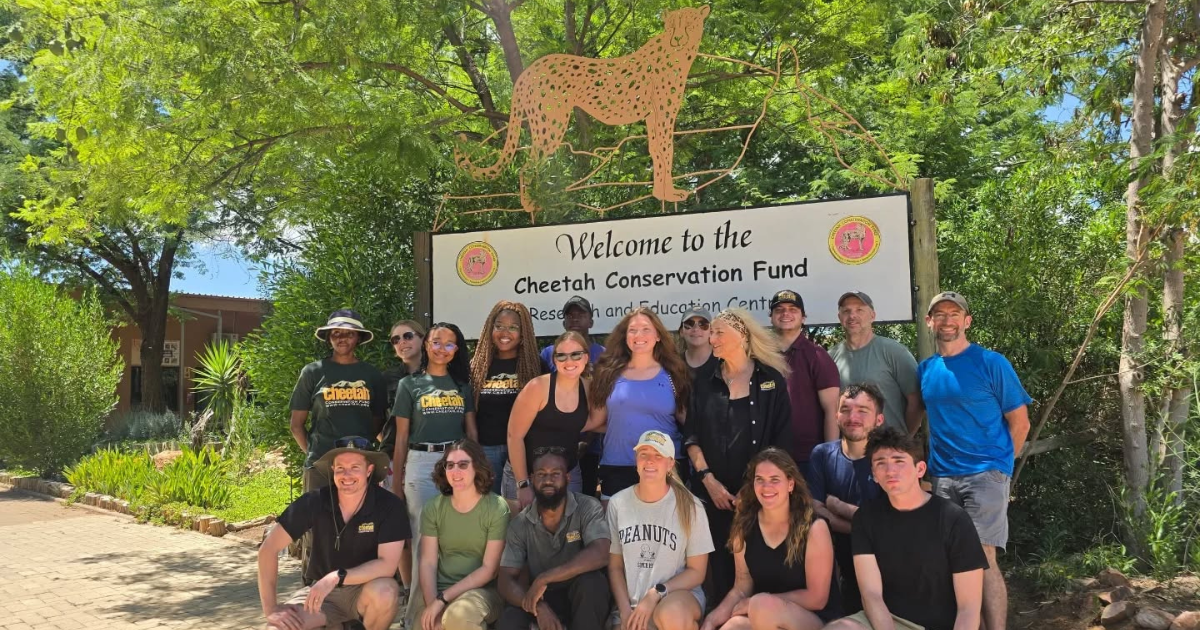
Saint Francis University Field Biology students at the Cheetah Conservation Fund in Namibia during their January 2026 global conservation experience.
Saint Francis University
Marie Young (myoung@francis.edu) or Erin McCloskey (emccloskey@francis.edu) Phone 814-471-1283Share this Story


Recent News
- Saint Francis University Introduces New $22,000 Scholarship to Support Future Teachers
- Saint Francis University Launches $20,000 Altoona-Johnstown Catholic Leadership Scholarship
- U.S. News and World Report names Saint Francis University #15 Best Value in the Regional Universities
- NASA Awards Nearly $400,000 to Launch Saint Francis University Rural Institute for Space Science and Engineering Collaboration
- Blanket Collection Kicks off September 16
- Saint Francis University to Host Suicide Prevention Walk Sept. 9
- Saint Francis University Sets Fall Admissions Visit Events
- Saint Francis University Unveils Fall 2026 Francis in the Marketplace Workshop Series
- Saint Francis University Expands Academic Portfolio to Meet Evolving Workforce Demands for 2026-2027
- Saint Francis University's Edward Zovinka Named 2026 Fellow of the American Chemical Society